
How to Tell If a Downpipe Is Blocked and How It Gets Cleared
TopRatedGutterCleaners.co.uk · 6 October 2026
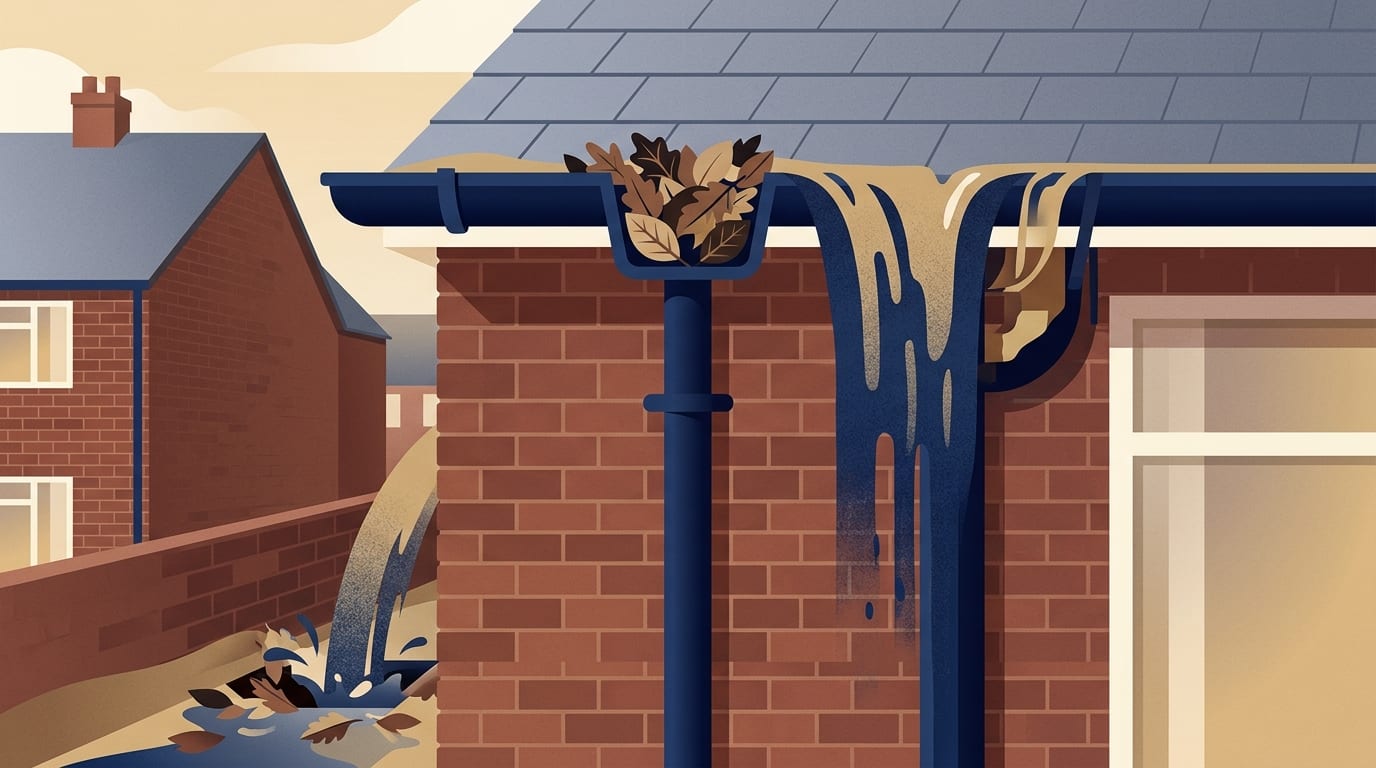
A downpipe is the vertical pipe that carries rainwater from the gutter outlet down to a drain, gully or drained surface. When a blockage forms inside it, water backs up to the roofline and spills over the edge of the guttering. A professional clears the pipe by working from the top with a gutter vacuum, or by hand using rods and flushing the system with water.
Signs your downpipe is blocked
You usually notice a problem with a downpipe when it rains heavily. The most obvious sign is water spilling from the gutter directly next to the top of the downpipe. Because the water cannot travel downwards, it fills the guttering around the outlet and pours over the side. You might also notice a damp patch on a wall where water has been constantly running down the brickwork.
Downpipes frequently leak at joints where blockages hasten corrosion, and fittings are best checked for leaks in heavy rain. If the blockage sits at the bottom of the pipe, you will often see a gully overflowing at ground level. Another clear sign is a downpipe that stays completely silent during a heavy downpour. If other pipes around your home are running with water but one is quiet, nothing is getting past the blockage.
Here are the main signs to look for.
- Water pouring over the gutter right next to the vertical pipe.
- A dripping joint halfway down the wall.
- Plants growing out of the gutter outlet at the top of the pipe.
- A downpipe that makes no sound during heavy rain.
- A damp patch on the brickwork behind the pipe.
- Water bubbling up out of the gully at ground level.
Where downpipes usually block
Debris can lodge anywhere in a rainwater system, but downpipes have specific pinch points. The most common spot is the gutter outlet, which is the hole where the horizontal gutter meets the vertical pipe. Leaves, moss and twigs wash along the gutter and form a clump over this hole. The building regulations guidance for England says a downpipe should be at least the size of the gutter outlet.
Blockages also form in bends and offsets. An offset is the angled piece of pipework that brings the downpipe from the edge of the roof back to the wall of the house. The angles slow the water down and catch larger pieces of debris. Hopper heads are another common trap. These are open boxes fixed to the wall that collect water from multiple pipes before sending it down a single downpipe.
Finally, blockages occur at the shoe or gully at the bottom. The shoe is the curved fitting at the base of the pipe that directs water away from the wall. Leaves and mud gather here and build up until the exit is completely sealed.
Downpipe, gutter or drain
When rainwater pours down your walls, you need to know which part of the system has failed. This helps you decide whether you need a gutter cleaner or a drainage company. If the overflow happens right next to the outlet but no water comes out at the bottom of the pipe, the evidence points to a blocked downpipe. The water is trapped in the vertical section.
If water spills over the edge along the entire length of the gutter run, it points to a blocked gutter. The horizontal channel is full of debris and cannot carry water to the downpipe at all. You can learn more about why gutters overflow to help diagnose this.
If water flows down the pipe but backs up and bubbles out of the gully at ground level, the problem points to the drain below. The downpipe is doing its job, but the underground pipework cannot take the water away.
Safe checks from the ground
You can figure out most rainwater problems without leaving the ground. Do not climb ladders to look inside your gutters, and do not try to use chemical unblockers in a downpipe. You should also never try jetting a downpipe yourself at home.
A council building maintenance guide advises checking gutters and rainwater goods for leaks during or just after rain. It also recommends checking for overflowing drains, which can be rodded and cleaned out, after high winds and heavy rain.
Here are the safe checks you can do yourself.
- Watch the gutters and downpipes during or just after a rain shower.
- Look closely at the gully grate at the bottom of the pipe.
- Lift any leaves or mud off the grate using thick gardening gloves.
- Listen to the pipe to hear if water is falling through it.
- Check the brickwork behind the pipe for fresh damp patches.
How professionals clear a downpipe
Gutter cleaning is usually priced per job, based on the type and height of the property, the length of guttering, how much debris has built up and how awkward the access is. A proper job covers every run that was quoted, the outlets, and a check that the downpipes are flowing. Common extras include unblocking downpipes, cleaning fascias and soffits, resealing a leaking joint, replacing brackets and fitting gutter guards.
There are two main methods for clearing a downpipe. A gutter vacuum is a wet and dry vacuum connected to lightweight poles with a curved nozzle, worked from the ground. It usually features a small camera on the pole so the inside of the gutter can be seen. You can read more about gutter vacuum cleaning methods to understand the process.
Manual clearing is done by hand from a ladder, tower or access platform, and is still needed for some heavy blockages and for repairs. A typical gutter clean includes checking and clearing the tops of downpipes. A simple flush test is often included in a gutter clean to ensure water can pass through. If a downpipe is solidly blocked lower down, the professional will clear it by rodding from the top, clearing the shoe at the bottom or splitting the pipe.
Ladders are not banned, but the Health and Safety Executive says they suit only low risk, short duration work. Its guidance for people using ladders at work includes keeping three points of contact, setting the ladder at a 75-degree angle, never resting it against weak surfaces such as plastic gutters, and not working within 6 metres horizontally of an overhead power line. The Work at Height Regulations 2005 require work at height to be properly planned, done by competent people and avoided where reasonably practicable.
Rules and protections for homeowners
When you hire someone to clear your gutters, several rules protect you. Under the Consumer Rights Act 2015, a service must be carried out with reasonable care and skill. If it is not, the customer can ask for it to be put right or for money back. A quote is a fixed price, while an estimate is not. A service agreed on the doorstep, by phone or online normally carries a 14-day cooling-off period.
A business that transports waste as part of its work must be registered as a waste carrier, and there is a public register. You should ask what happens to the debris removed from your gutters. Employers' liability insurance is compulsory for a business with employees. Public liability insurance is not a legal requirement, but it is the cover that pays if property is damaged or someone is injured, so you should ask for a current certificate.
In England, section 11 of the Landlord and Tenant Act 1985 makes the landlord of a short tenancy responsible for keeping the structure and exterior in repair, and it names gutters and external pipes. Replacing guttering is normally treated as maintenance, but listed buildings and conservation areas may need consent, so you should check with the council.
Common problems to watch out for
You need to know what a bad job looks like so you can avoid it. Beware of cold callers who say the gutters or roof need urgent work and quote on the spot. Sometimes, a cheap gutter clean is used to sell roof repairs you do not need. You should expect before and after photos to prove the work was done properly.
A poor service often leaves the downpipes blocked while only the easy runs are cleaned. You might also find debris dumped in the garden instead of taken away. Never agree to paying in full up front. You should also watch out for paying for a clean when the real fault is a failed joint, a sagging run or a blocked drain.
What clearing a downpipe costs
Gutter cleaning prices change based on how much debris has built up and the height of the roof. Conservatories and extensions below the gutter line and three-storey houses cost more. Awkward jobs may need a tower or access platform, which adds cost. You must ask whether full unblocking is included in a standard clean, as unblocking a downpipe that is solidly blocked lower down is usually charged separately.
This table shows typical costs for clearing and replacing a downpipe.
|
Service |
Typical price range |
|---|---|
|
Clearing a fully blocked or compacted downpipe |
£15 to £40 per downpipe |
|
Downpipe unblocking as an add-on (outside London) |
£30 to £80 |
|
Downpipe unblocking as an add-on (in London) |
£40 to £100 |
|
Standalone visit minimum charge |
£40 to £60 |
|
Replacing a downpipe |
£80 to £250 |
These figures are typical published prices for 2026, and local quotes will differ. If you are paying for a full gutter clean at the same time, gutter cleaning outside London typically costs £50 to £90 for a bungalow. A two-storey house costs £80 to £150, and a three-storey house or hard access property costs £150 to £300.
When the problem is the drain below
Sometimes the downpipe is clear but the water has nowhere to go. Approved Document H says a rainwater drainage system should carry rainwater from the roof to an outfall, minimise the risk of blockage or leakage and be accessible for clearing blockages. Rainwater should go, in order of priority, to a soakaway or other infiltration system, a watercourse or a sewer.
Rainwater pipes should discharge into a drain or gully but may discharge to another gutter or onto another surface if it is drained. Where a pipe discharges onto a lower roof or paved area a shoe should be fitted to divert water away from the building. Gullies and outdoor drains often become blocked with leaves, mud, grease and general outdoor debris, especially in wetter months. Blocked gullies may lead to a build-up of water and damage to foundations.
This table shows typical costs for clearing the drains below your downpipes.
|
Drainage service |
Typical price range |
|---|---|
|
Gully drain cleaning |
£80 to £120 |
|
Outside drain unblocking |
£80 to £150 |
|
Drain rodding |
£80 to £145 |
|
Drain jetting |
£70 to £175 |
|
CCTV drain survey |
£90 to £350 |
|
Call-out fee |
£50 to £100 |
|
Emergency call-out fee |
£100 to £200 |
These figures are typical published prices for 2026, and local quotes will differ.
Who is responsible for the drain
Finding out who pays for a blocked drain depends on where the pipe is and who it serves. In England and Wales, homeowners are responsible for repairs to drains that serve their property and lie beneath the property, garden or driveway. This means a blocked gully at the bottom of your downpipe that serves only your home and sits within your boundary is normally the homeowner's responsibility.
Wastewater companies are responsible for the large sewers normally found under the road or pavement and for shared pipework connecting to a public sewer. If the blockage is in the public sewer or in shared pipework connecting to it, the water company is responsible. If you are a tenant with a blocked downpipe, you should report it to your landlord or letting agent.
Stopping it happening again
The best way to keep downpipes clear is to stop debris reaching them. Regular gutter cleaning in spring and autumn removes the leaves and moss before they wash into the vertical pipes. The council building maintenance guide lists clearing leaves and debris from gutters and downpipes in March to May and again in September to November, and clearing valley gutters of ice and snow in December to February.
Wire balloons above downpipes can help, but material left to gather around them may cause blockages. If a balloon or guard is fitted, you still need to have the gutters checked and cleared regularly. You can find out more about what to expect by reading what to check before booking.
Common questions
What is a downpipe?
A downpipe is the vertical pipe on the outside of a building that carries rainwater from the roof down to the ground. It connects to the gutter outlet at the top and usually discharges into a drain, gully or drained surface at the bottom.
What is a downpipe gully trap?
A gully trap is the basin at ground level where the downpipe ends. It catches rainwater before sending it into the underground drainage system, and it often has a grate to stop leaves and outdoor debris falling into the drain.
How do you unblock a downpipe from the ground?
From the ground, a professional can use a gutter vacuum on long, lightweight poles to clear the outlet at the top of the pipe. A blockage lower down may need rodding, and one at the very bottom may mean clearing the shoe or the gully by hand.
What happens if a downpipe is blocked at the bottom?
If the blockage sits at the bottom, the pipe can fill with rainwater during a storm. Water may then leak from the joints, and once the pipe is full it spills over the gutter at the top.
What to do next
Before you hire a professional to clear your downpipes, use this checklist to make sure you get a fair and thorough service.
- Check the gully grate at ground level and remove any surface leaves or mud safely with thick gloves.
- Watch your gutters and downpipes during heavy rain to see exactly where the water spills or leaks.
- Ask the gutter cleaner if their standard quote includes checking the flow of the downpipes and unblocking them if needed.
- Ask for a fixed price quote rather than an estimate, and check if they charge a minimum call-out fee.
- Ask for before and after photos so you can be sure the entire system is clear.
- Check that the business has public liability insurance and ask what they do with the waste they remove.
- Watch out for cold callers quoting on the spot, downpipes left blocked, debris dumped in the garden, and paying in full up front.
A blocked downpipe causes water to cascade down your walls, but it is usually a fast and simple job for a professional to fix. If you have noticed overflowing water, damp patches or leaking joints, you can find a gutter cleaner near you to clear the system and protect your brickwork.
Related Guides
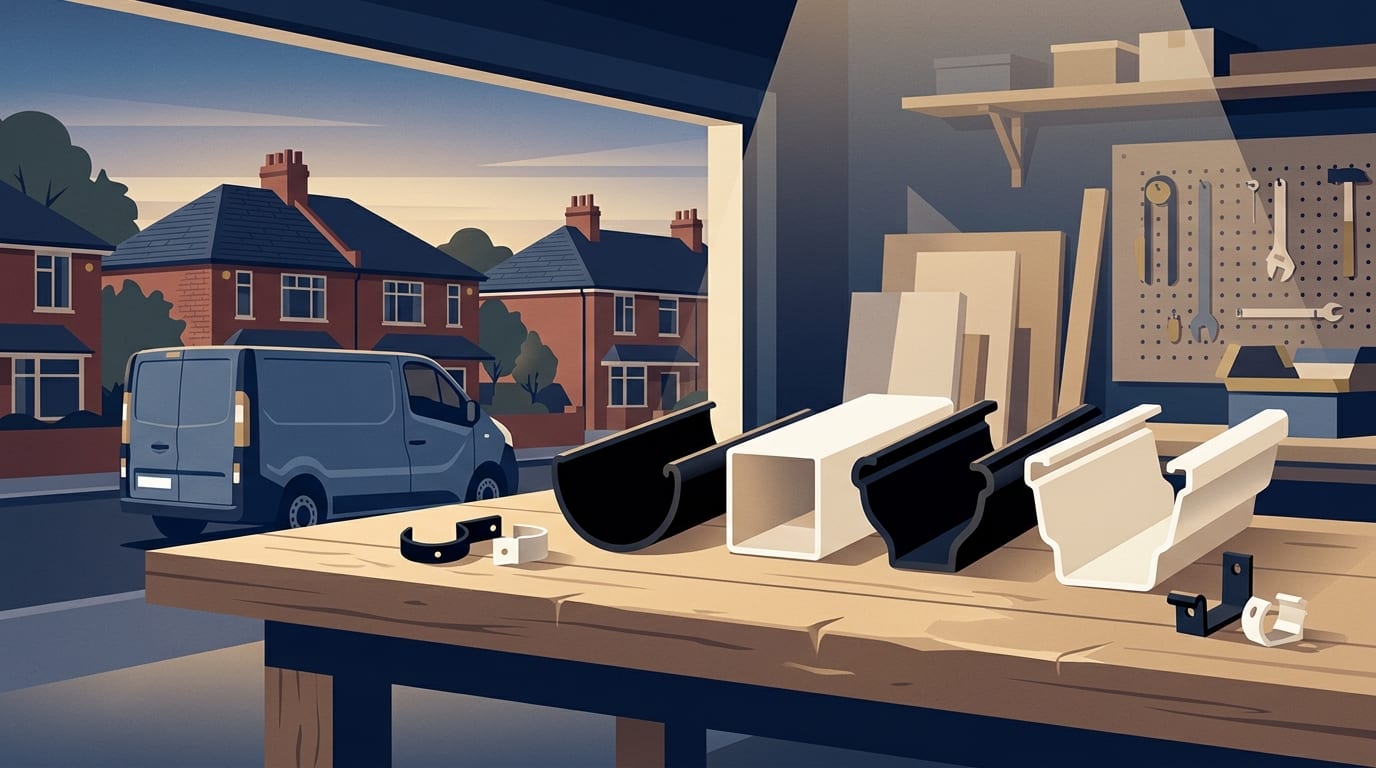
Half Round, Square, Ogee and Deep Flow Gutter Profiles Compared
How half round, square, ogee and deep flow gutters differ in looks and capacity, what each costs per metre in 2026 and how to choose one when you replace.

Eaves Trays Explained and What Fitting Them Costs
What eaves trays are, how rotten felt at the roof edge lets rain run behind your gutters, what fitting trays costs in 2026 and how to check it is done right.

What Is a Soakaway and What to Do When It Stops Draining
What a soakaway is, how to tell if your downpipes drain to one, the signs it is failing, what clearing or replacing it costs and the rebate you may be owed.