
Gutter Repair or Replacement and How to Tell Which You Need
TopRatedGutterCleaners.co.uk · 30 September 2026

A gutter that overflows only when full of leaves and moss usually just needs cleaning out. Water dripping at joints, visible gaps, sagging runs, cracked sections and rainwater running down the wall behind the gutter point to a fault that needs repair. Booking a professional clean first often reveals the true problem, as clearing the debris allows you to see the bare plastic or metal underneath.
Signs your gutters need more than a clean
It is difficult to see what is happening inside your gutters from the ground. A heavy blockage of moss, leaves and roof sand acts like a dam, causing rainwater to spill over the front edge. Once the debris is removed, a healthy gutter will catch the water and send it straight down the pipes.
You can often spot a deeper fault by watching the roofline during bad weather. A council building maintenance guide advises checking gutters and rainwater goods for leaks during or just after rain. This is a simple way to catch a failing section before it causes damp inside your home.
These signs suggest you are dealing with a fault rather than a simple blockage:
- Water constantly dripping from a specific joint long after the rain has stopped
- A visible bow or dip in the middle of a straight run of guttering
- Rainwater running down the fascia board behind the back of the gutter
- Cracks, holes or ragged edges visible from the ground
- Pieces of plastic or metal bracket lying on the patio or lawn below
- A downpipe that has come loose from the wall or has a broken collar
- Damp patches appearing on your external brickwork directly under a joint
If you only see water pouring over the top edge during a heavy downpour, and the gutter looks straight and secure, a standard cleaning service is the best place to start. A professional using a gutter vacuum will work from the ground using lightweight poles and a curved nozzle. They usually have a small camera on the pole so the inside of the gutter can be seen clearly on a monitor.
Common gutter repairs and what they cost
Most minor gutter repairs are quick to fix once the tradesperson has safe access to the roofline. Manual clearing and repair work is done by hand from a ladder, a scaffold tower or an access platform. The final price depends on the type of property, the height of the gutters and how awkward the access is.
A standard repair on a modern uPVC system usually takes two to four hours. Older cast iron systems take longer to repair, typically needing four to six hours of labour. If the tradesperson needs to hire a scaffold tower for safe access, hire costs run from around £30 a day to as much as £115 a week. Fully erected scaffolding on a single elevation costs between £300 and £800.
The table below shows expected prices for specific repair jobs. These figures assume standard access without the need for fixed scaffolding.
|
Type of repair |
Expected price range |
|---|---|
|
Resealing a leaking joint |
£60 to £150 |
|
Replacement brackets or clips |
£10 to £15 each |
|
Replacing a short section of 1 to 3 m |
£60 to £200 |
|
Re-securing a sagging gutter |
£60 to £250 |
|
Downpipe replacement |
£80 to £250 |
This table shows typical published prices for 2026. Local quotes will differ based on your location, the height of your house and the condition of the existing plastic or metal.
Why gutter joints leak
Leaking joints are one of the most common guttering faults. Plastic uPVC gutters are installed in sections, and these sections meet at union joints. Inside each joint is a rubber seal that compresses to create a watertight grip on the plastic.
Over the years, these rubber seals degrade, dry out and lose their elasticity. Weather also plays a part. Plastic expands in the summer heat and contracts in the freezing winter. This constant movement can gradually pull the sections apart, breaking the seal and allowing rainwater to escape.
A tradesperson will fix this by unclipping the joint, cleaning away the dirt and fitting a new rubber seal. Sometimes they will replace the entire union joint if the plastic casing has become brittle. Resealing a leaking joint costs £60 to £150, making it a very affordable fix if caught early.
Sagging gutters and failed brackets
Gutters are held in place by fascia brackets screwed into the timber just beneath the roof. If these brackets fail, the gutter drops. A sagging gutter cannot flow towards the downpipe, creating a pool of standing water that eventually spills over the sides.
Brackets usually snap because of excess weight. A gutter full of wet mud, rotting leaves and standing water is incredibly heavy. Sudden winter snow sitting in the guttering also puts immense strain on the plastic clips. Sometimes, the original installers simply spaced the brackets too far apart to support the run properly.
Replacement brackets or clips cost £10 to £15 each. Re-securing a sagging gutter costs £60 to £250. A proper repair involves removing the sagging section, fitting new brackets at the correct spacing and height to give a gentle fall towards the outlet, and securing the gutter back into place.
When replacement makes more sense
Patching up an old, failing system is a false economy. If the plastic is brittle and snapping in multiple places, fixing one joint will only put pressure on the next one. A clean with before and after photos will show how far the damage goes, and our guide on what to check before you book a gutter cleaning service explains what evidence to ask for.
Different materials have different expected lifespans. Modern uPVC lasts about 15 to 30 years before the plastic degrades in the sunlight. Aluminium systems last 30 years or more. Traditional cast iron gutters can last 50 years or longer if they are painted and maintained properly.
These signs suggest you need a full replacement rather than a repair:
- Repeated blocking or overflowing despite regular cleaning
- Multiple sagging or bowing sections across different sides of the house
- Leaks at several joints and corners at the same time
- Widespread cracks, holes or missing sections
- Persistent damp patches on walls or rotting wooden fascias
- The guttering visibly pulling away from the roofline
How much gutter replacement costs
Replacing the entire system is a major job. A semi-detached house takes a two-person team half a day to a full day to complete. The price changes heavily based on the length of the run, the material you choose, how awkward the access is and whether you need scaffolding.
Typical published prices for 2026 show uPVC replacement on a semi-detached house costs anywhere between £600 and £1,600. The span is wide because published figures differ and because the price depends on the length of guttering, the number of downpipes and how easy the access is. If you need full scaffolding on a two-storey house, expect to pay £600 to £1,500 just for the access before the guttering is even priced.
The table below shows the expected total cost to supply and fit new uPVC gutters and downpipes across different house sizes.
|
Property type |
Expected replacement cost (uPVC) |
|---|---|
|
Terraced house |
£400 to £1,300 |
|
Semi-detached house |
£600 to £1,600 |
|
Detached house |
£1,000 to £2,300 |
This table shows typical published prices for 2026. Local quotes will differ based on the exact length of your roofline and whether fixed scaffolding is required.
uPVC, aluminium or cast iron
The material you choose changes the price and the lifespan of the new system. Most UK homes use uPVC because it is affordable, lightweight and will not rust. Supplied and fitted, uPVC costs £40 to £50 per metre.
Aluminium is stronger and can be manufactured in seamless continuous lengths, which means fewer joints and fewer places to leak. It is usually powder-coated and does not rust. Supplied and fitted, aluminium costs £55 to £78 per metre.
Cast iron is incredibly heavy and is mostly used on period properties or heritage homes to keep the traditional look. It requires regular painting to stop it rusting but will outlast plastic easily if looked after. Supplied and fitted, cast iron costs £50 to £75 per metre.
Do you need permission to replace gutters?
Replacing guttering is normally treated as routine maintenance. For most standard houses, you do not need planning permission because the work falls under permitted development rights.
The rules change if you live in a listed building or a designated conservation area. In these cases, you may need consent to change the appearance of the exterior. The council may expect old cast iron gutters to be replaced like for like to keep the character of the building. Always check with your local council before ripping down old metal gutters.
Who pays in a rented home?
If you rent your home on a short tenancy in England, the responsibility for fixing broken gutters falls to your landlord.
Under section 11 of the Landlord and Tenant Act 1985, the landlord must keep in repair the structure and exterior of the dwelling-house. The legislation specifically names drains, gutters and external pipes. If a sagging run is causing water to pour down the brickwork, you should report it to your landlord or letting agent in writing so they can arrange the repair.
Who to hire for gutter repairs
Many professional gutter cleaners handle small repairs like swapping a bracket, resealing a joint or replacing a short section of plastic. Because booking a clean first often reveals the true fault, a competent cleaner can clear the debris, spot the broken seal and fix it on the same day. Full replacement of the entire system is usually treated as roofline or roofing work, requiring a specialist installation team.
When you ask for prices, make sure you understand the difference between a quote and an estimate. A quote is a fixed price for the job. An estimate is a rough guess that can go up once the work starts. A proper quote will list exactly which runs are covered, the outlets, and a check that the downpipes are flowing clearly.
A few problems come up again and again when hiring someone for roofline work. Be very cautious of cold callers who knock on your door, say the gutters or roof need urgent work, and quote on the spot. A cheap gutter clean is sometimes used as a tactic to sell roof repairs you do not actually need. Never pay in full up front, and watch out for traders who clean only the easy runs, leave downpipes blocked, or dump the wet debris in your garden.
A business that transports waste as part of its work must be registered as a waste carrier, and there is a public register you can check. Always ask the tradesperson what happens to the debris pulled from your roof.
Under the Consumer Rights Act 2015, a service must be carried out with reasonable care and skill. If it is not, you can ask for the work to be put right or for your money back. If you agree to a service on the doorstep, by phone or online, it normally carries a 14-day cooling-off period.
Safety is critical. Ladders are not banned, but the Health and Safety Executive (HSE) says they suit only low-risk, short-duration work. The HSE guidance for people using ladders at work includes keeping three points of contact and setting the ladder at a 75-degree angle. The same guidance says a ladder should not be rested against weak surfaces such as plastic gutters, and that no one should work within 6 metres horizontally of an overhead power line. The Work at Height Regulations 2005 require all work at height to be properly planned, done by competent people and avoided where reasonably practicable.
Finally, ask about insurance. Employers' liability insurance is compulsory for a business that has employees. Public liability insurance is not a legal requirement, but it is the cover that pays out if your property is damaged or someone is injured during the job. Always ask to see a current certificate before they climb a ladder on your property.
Common questions
Can a leaking gutter joint be repaired?
Yes, a leaking joint is one of the easiest faults to fix. A tradesperson will unclip the joint, remove the dirt, and fit a new rubber seal. If the plastic casing is brittle or cracked, they will replace the whole union joint for a small cost.
Does gutter cleaning include repairs?
Routine cleaning focuses purely on removing moss, leaves and sludge to get the water flowing again. Repairs are usually priced separately. Many companies will offer to fix minor leaks or replace missing brackets while they are on site, but you should agree the extra cost before they start.
How long does gutter replacement take?
Replacing the gutters and downpipes on a standard semi-detached house takes a two-person team between half a day and a full day. The work takes longer if they are fitting heavy cast iron or if the house requires complex scaffolding to reach over extensions or conservatories.
Should I pay up front for guttering repairs?
You should never pay the full amount up front for cleaning or repair work. You may be asked for a small deposit to cover the cost of ordering specific parts, but the final balance should only be paid once the job is finished and you are happy that the water flows correctly.
Next steps
Before you commit to a repair or a full replacement, take a methodical approach to finding the right tradesperson. Doing a few simple checks protects your property and your wallet.
- Walk around your house during heavy rain and note exactly where the water drips or overflows
- Book a standard clean first if the gutters are full of visible moss and leaves
- Ask the tradesperson for a fixed quote in writing, not a verbal estimate
- Ask to see their public liability insurance certificate and their waste carrier registration
- Check their recent customer feedback on trusted platforms like Google reviews
- Ask for before and after photos of the cleared runs and the newly fitted parts
Finding a reliable professional is much easier when you can see how they have treated other homeowners in your area. You can use our directory to find a gutter cleaner near you who has built a solid local reputation based on genuine customer feedback.
Related Guides
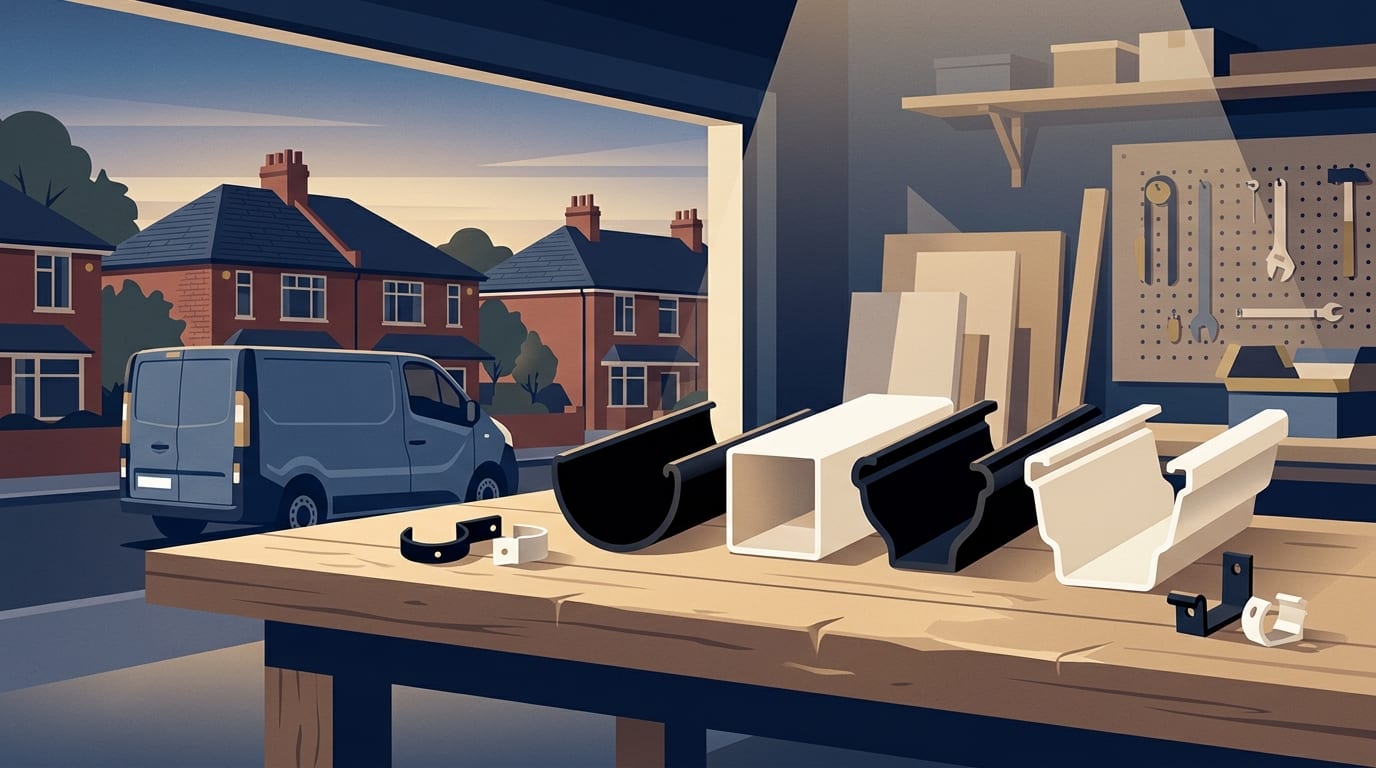
Half Round, Square, Ogee and Deep Flow Gutter Profiles Compared
How half round, square, ogee and deep flow gutters differ in looks and capacity, what each costs per metre in 2026 and how to choose one when you replace.

Eaves Trays Explained and What Fitting Them Costs
What eaves trays are, how rotten felt at the roof edge lets rain run behind your gutters, what fitting trays costs in 2026 and how to check it is done right.

What Is a Soakaway and What to Do When It Stops Draining
What a soakaway is, how to tell if your downpipes drain to one, the signs it is failing, what clearing or replacing it costs and the rebate you may be owed.